

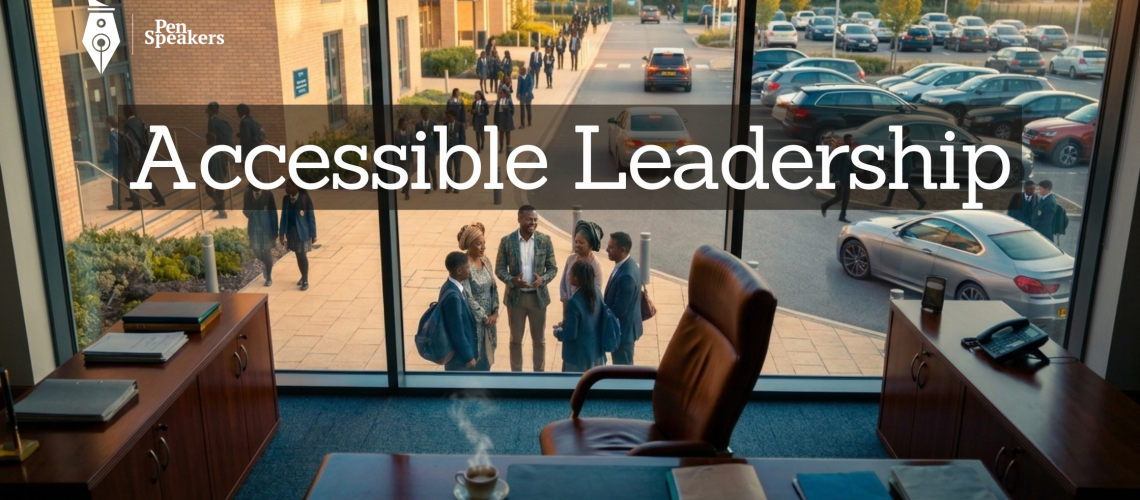
Some Fridays ago, I did something I’d wanted to do for a while but never seemed to have time for.
At close of school, instead of staying in my office working through the never-ending pile of emails and documents, I went downstairs.
To the pickup point.
Where parents come to collect their children at the end of the school day.
And I greeted them.
That’s it. Nothing dramatic. No grand gesture. No special event.
I just showed up, smiled, shook hands, asked how they were doing, and connected with the people whose children I serve every day.
And something remarkable happened.
The Conversations That Happen When You Show Up
Within minutes, I was having conversations I would never have had if I’d stayed in my office.
Parents who had wanted to meet with me but hadn’t found the time to schedule an appointment suddenly had access. Right there, in the few minutes whilst waiting for their child.
Quick questions were answered.
Concerns were addressed.
Decisions were made on the spot based on feedback they gave me.
Nothing formal. Nothing scheduled. Just presence creating opportunity.
And I thought: Why don’t I do this more often?
The Office as a Fortress
Here’s the truth about leadership, especially in schools, organizations, and institutions:
It’s very easy to become inaccessible without even realizing it.
You’re busy. Genuinely, legitimately busy. There are emails to respond to, reports to review, meetings to attend, decisions to make, crises to manage.
So you stay in your office.
You work through lunch. You close your door so you can focus. You rely on your secretary to screen calls and visitors. You communicate through official channels—emails, memos, scheduled appointments.
And slowly, without intending to, your office becomes a fortress.
Parents and staff know you’re there. But you feel distant. Unreachable. Someone they need to “get an appointment with” rather than someone they can simply talk to.
And that distance costs you something.
What You Lose When You’re Not Accessible
When leaders become inaccessible, several things happen:
- You Lose the Pulse of Your Organization
The most valuable information doesn’t come through official reports. It comes through casual conversations.
- The parent who mentions in passing that their child is struggling with something you didn’t know about
- The staff member who shares a concern they wouldn’t put in an email
- The student who feels comfortable enough to tell you what’s really happening in the classroom
If you’re not accessible, you miss these insights.
You end up making decisions based on filtered information—what people think you need to know—rather than the full picture.
- You Create Unnecessary Barriers
When people have to schedule an appointment to talk to you about something simple, they often just… don’t.
They figure it’s not important enough. They convince themselves it can wait. They decide you’re too busy to be bothered.
And sometimes, those “small things” grow into big problems because they were never addressed.
Accessibility removes friction.
It says: “You don’t need a formal process to talk to me. I’m here. I’m available. Let’s solve this now.”
- You Become a Symbol, Not a Person
When people only see you at formal events, official meetings, or when there’s a crisis, you stop being a real person to them.
You become “The Principal” or “The CEO” or “The Boss”—a title, not a human being.
But people don’t connect with titles. They connect with people.
When you show up at the pickup point, or walk through the office, or sit in the staff room during lunch, you remind people that you’re not just a position—you’re a person who cares, who listens, who’s part of the same community they are.
- You Miss Opportunities to Encourage
Leadership isn’t just about solving problems. It’s also about seeing people, affirming them, and reminding them that what they do matters.
But you can’t encourage people you don’t see.
When I went downstairs on Friday, I didn’t just solve problems. I also:
- Thanked a parent for their patience with a process
- Commended a staff member for something I’d noticed earlier in the week
- Made a child smile by remembering their name
These small moments compound.
They create goodwill. They build trust. They remind people that leadership isn’t distant—it’s present.
What Accessible Leadership Looks Like
So what does it mean to be an accessible leader?
It doesn’t mean you have an open-door policy 24/7. That’s not sustainable, and it’s not wise. You need focus time. You need boundaries.
But it does mean you intentionally create moments of accessibility within your week.
Here are a few practical ways to do this:
- Show Up Where People Are
Don’t wait for people to come to your office. Go to them.
- Walk through the classrooms or workspaces
- Attend the staff lunch occasionally
- Be visible at pickup or drop-off times
- Join the queue in the cafeteria instead of having lunch delivered to your office
Presence is accessibility.
- Have “Open Office” Hours
Block out a specific time each week where people can drop by without an appointment.
Maybe it’s Friday afternoons from 3-5 PM. Maybe it’s Tuesday mornings from 8-9 AM.
Communicate it clearly: “During these hours, my door is open. No appointment needed. Come talk to me.”
This removes the barrier of formality whilst still protecting your focus time.
- Respond Quickly to Small Things
When someone sends you a quick question via email or WhatsApp, respond promptly—even if it’s just: “Got it. I’ll look into this and get back to you by [time].”
Quick responses signal accessibility. They tell people: “I see you. I hear you. You’re not being ignored.”
- Make Informal Conversations a Priority
Not every conversation needs to be a scheduled meeting with an agenda.
Sometimes the most valuable exchanges happen in hallways, at the water cooler, or during a casual walk around the building.
Don’t dismiss these moments as interruptions. Treat them as opportunities.
- Remember Names and Details
Accessibility isn’t just about being physically present. It’s about being emotionally and mentally present.
When you remember someone’s name, their child’s name, a project they’re working on, or something they mentioned last time you spoke—you signal: “You matter to me. I’m paying attention.”
That’s what makes people feel truly seen.
The Fear of Being Too Accessible
I know what some leaders are thinking: “If I make myself too accessible, I’ll be overwhelmed. People will take advantage. I’ll never get any work done.”
I get it. That’s a legitimate concern.
But here’s the thing: Accessibility doesn’t mean availability for everything, all the time.
You can be accessible and still have boundaries.
You can show up at the pickup point on Fridays without being expected to do it every single day.
You can have open office hours without people assuming you’re available 24/7.
You can respond quickly to simple questions without committing to solve every problem immediately.
The key is intentionality.
You decide when and how you’ll be accessible. You communicate it clearly. You protect your focus time whilst also creating regular moments of presence.
What I Learned by Going Downstairs
That Friday afternoon taught me something I already knew but had forgotten in the busyness of leadership:
People don’t just need my decisions. They need my presence.
They need to know I’m not locked away in an ivory tower, disconnected from the day-to-day reality of what they’re experiencing.
They need to see that I’m approachable, that I care, that I’m not too important or too busy to simply show up.
And honestly? I needed it too.
Those few minutes at the pickup point reminded me why I do this work in the first place.
Not to send emails or attend meetings or review reports.
But to serve people. To build relationships. To be part of a community.
And you can’t do any of that from behind a closed office door.
A Challenge
If you’re a leader reading this, here’s my challenge:
This week, go downstairs.
Literally or figuratively.

Go to where your people are. Show up where you’re not expected. Make yourself accessible in a way you haven’t recently.
It might be:
- Walking through the office and stopping to chat with a few team members
- Attending a meeting you don’t usually attend, just to listen
- Responding personally to a few emails you’d normally delegate
- Showing up at an event where your presence would be noticed and appreciated
Don’t announce it. Don’t make a big deal about it. Just do it.
And watch what happens.
You might be surprised at how much changes when you simply show up.
Let me know your thoughts. How do you balance accessibility with the need for focus time and boundaries?